Arlington Heights, WA · Snohomish County
Water Damage Restoration in Arlington Heights, WAWater Damage Repair & Water Extraction
Water Damage Restoration in Arlington Heights covers water extraction, storm damage repair and water damage repair.
Answered 24/7
Water Damage Restoration Services Available in Arlington Heights
Sewage backups in Arlington Heights need different handling from a clean-water leak. Local water damage pros remove the contaminated water and materials, clean and disinfect the area, and then dry it.
Clean-water leaks get the same careful drying, with moisture readings taken and logged each day from the start of the job to the finish.
For businesses in Arlington Heights and nearby Arlington, Bryant and Sisco Heights, downtime is the main cost of water damage. Local water damage pros bring industrial pumps and drying equipment sized for large spaces.
Available Water Damage Restoration Services in Arlington Heights
The services below are grouped by the kind of damage, and each link leads to a page with signs, steps and cost factors.
Water Damage Services in Arlington Heights
Help for leaks, burst pipes, flooded rooms and wet ceilings, from water extraction to structural drying.
Warning Signs You Need Water Damage Restoration
Crumbling Drywall Around Windows
Stains or soft drywall below a window after rain point to a failed seal letting water into the wall.
Puddles Around Appliances or Toilets
Standing water near the water heater, washing machine or toilet base means a hose, valve or seal is leaking.
Sewage Backup in Basement Drains
Wastewater coming up through floor drains is a health hazard. Keep people and pets away from it.
Bubbling or Peeling Paint
Paint that blisters or peels away from the wall has moisture underneath. Repainting before it dries only hides the problem.
Persistent Musty Odors in Rooms
A lingering earthy smell often means mold is growing somewhere you cannot see, usually where a leak went unnoticed.
How Water Damage Restoration Works in Arlington Heights
Step 1: Emergency Water Extraction
Truck-mounted pumps and extractors remove the standing water so it stops spreading into dry rooms.
Step 2: Structural Drying and Dehumidification
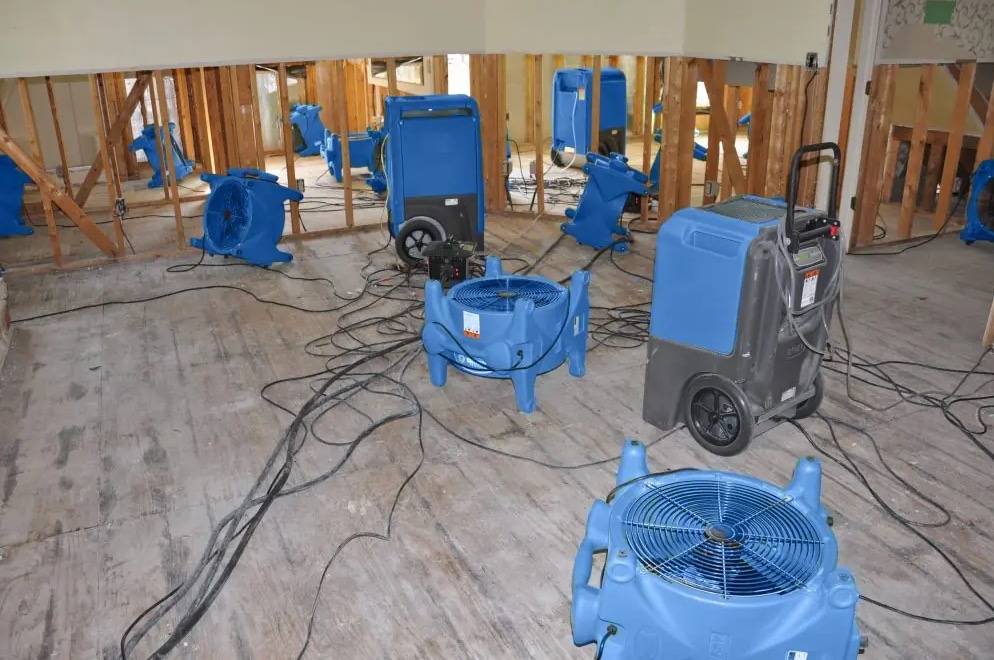
Air movers and dehumidifiers dry walls, floors and hidden cavities to help prevent warping and mold.
Step 3: Content Cleaning and Sanitization
Wet belongings are cleaned, disinfected or packed out for off-site cleaning so more of them can be saved.
Step 4: Final Repair and Restoration
Once moisture readings are dry, damaged drywall, insulation and flooring are replaced and finished.
Leading Causes of Home Water Damage in Arlington Heights
Roof Leaks From Damaged Shingles
Missing, cracked or aging roofing lets rain into the attic and then the ceilings below.
Foundation Cracks and Seepage
Saturated soil presses water through cracks in foundation walls or the slab, soaking lower floors.
Sprinkler System Leaks or Breaks
A broken underground irrigation line soaks the soil around the house, and that water can seep inside.
HVAC Condensate Drain Line Clogs
A blocked AC drain line makes the drain pan overflow, leaking water into walls or ceilings.
Burst or Leaking Supply Lines
High water pressure, corrosion or a loose fitting can make a pipe fail and release water fast.
Water Damage Restoration for All Properties in Arlington Heights
Residential Water Damage Restoration
In apartments and condos, a leak often reaches the units below and shared areas. Pros stop it at the source and dry every affected wall, ceiling and floor.
Commercial Water Damage Restoration
In industrial buildings, water can reach machinery, stock and electrical controls. Pros make the area safe first, then extract and dry large open floors.
Water Damage Restoration: What to Handle Yourself and What to Leave to Pros
You can mop a minor clean-water spill on a hard floor. Do not clean up a toilet overflow or sewage backup yourself; sewage carries harmful bacteria. Call the pros for sewage cleanup.
Understanding Water Damage Restoration Costs in Arlington Heights
In Arlington Heights, delays raise the cost: water left sitting soaks deeper and can bring mold, which adds removal work.
Duration of Saturation
The longer water sits, the deeper it soaks and the more likely mold becomes, which widens the job.
Content Restoration Needs
Cleaning and drying furniture, belongings and documents is billed separately from the structure.
Material Absorption Rates
Drywall, insulation and carpet hold more water than concrete or tile, so they take longer to dry or need replacing.
Access and Containment
Crawl spaces and wall cavities are harder to reach and may need extra access work or containment.
Does Insurance Cover Water Damage Restoration?
Sewage backup may need a specific policy rider. Pros document the contamination and damage for your claim; your insurer decides coverage.
Why Local Help Matters for Water Damage Restoration in Arlington Heights
Sewage Cleanup Safety
For sewage backups, the pros use protective gear and disinfectants to deal with the contamination safely.
IICRC-Standard Drying Methods
Pros follow industry drying standards and dry both the materials and the air, which helps prevent mold and weakened framing.
Advanced Moisture Detection
Thermal cameras and moisture meters find water inside walls and under floors before it causes damage you cannot see.
Comprehensive Water Extraction
Industrial pumps and extractors remove standing water fast, which is the step that limits the damage most.
Emergency Water Damage Restoration Available in Arlington Heights
For emergency water extraction and flood cleanup in Arlington Heights, day or night, call (360) 685-7801. The pros answer 24/7.
Call Now (360) 685-7801Your Water Damage Restoration Questions Answered
What should I do immediately after discovering water damage?
Shut off the water if you can, move valuables to a dry area and call (360) 685-7801 for emergency water extraction.
How long does structural drying typically take?
Usually three to five days with industrial equipment. Heavy saturation, dense materials or high humidity can stretch it longer.
What does water mitigation mean?
The first actions that keep damage from spreading: extracting water, setting drying equipment and removing wet materials.
What happens during the flood cleanup process?
Extracting water, removing wet materials that cannot be saved, cleaning and disinfecting surfaces, then drying what remains.
How does storm damage differ from other water damage?
Storms often cause several kinds of damage at once, such as roof, window and water damage, so the roof or wall opening has to be fixed as well as the inside dried.
What equipment is used for water extraction?
Truck-mounted or portable submersible pumps for deep water and wet vacuums for carpet and hard floors.
All Restoration Services in Arlington Heights, WA
Water Damage1
Local Water Damage Restoration Areas Including Arlington Heights
The places below are also served, and each one has its own page.